
The three numbered suits
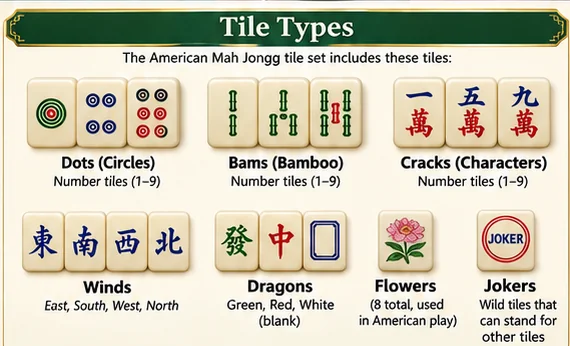
Dots, sometimes called circles, show a count from one through nine. Bams represent bamboo and also run from one through nine. Cracks, sometimes called characters, are the third numbered suit. Different manufacturers decorate their tiles in different ways, and the one-bam tile may look especially distinctive.
Many sets include small western numerals or letters to help learners identify tiles. Do not assume every design looks like the picture in a tutorial. If you switch sets at a club or a friend’s house, take a minute to examine unfamiliar markings.
Winds and dragons
Four wind tiles are named East, South, West and North. Dragon tiles are typically described as red, green and white, though the visual designs can vary. These are not numbered suits, and their role in a permitted hand depends on the current card.
The white dragon in particular can surprise new players: on some sets it looks blank, while on others it has a symbol or border. Learn its appearance on the actual tiles you will use.
Flowers and jokers
Flowers and jokers are important features of the American game. Flower tiles may show different illustrations or numbers; they should not be confused with the numbered suits. Jokers have specific rules governing where they can be used.
A common beginner mistake is to think that a joker is an unrestricted wild tile. It is not. The correct use depends on the kind of grouping and the rules in effect. Check the official rules or ask your instructor about each situation.
A five-minute recognition drill
Spread a few tiles face up and sort them into numbered suits, winds, dragons, flowers and jokers. Then shuffle the tiles and sort again without referring to notes. Time yourself if you enjoy a challenge, but accuracy matters more than speed.
After mastering categories, practice identifying the number on every dot, bam and crack. Try the exercise with a different set if possible. The goal is to become comfortable recognizing tile families while chatting and playing.
Try a quick tile recognition check
Without looking at the illustration above, name the tile family described by each clue. Open the answer to check your work.
- A tile shows several round circles, representing a value from one to nine.
Show answer
Dots (circles). One of the three numbered suits.
- A tile is marked with bamboo-like strokes, sometimes with an especially decorative one.
Show answer
Bams (bamboo). Another numbered suit.
- A tile uses a Chinese character associated with a numbered value.
Show answer
Cracks (characters). The third numbered suit.
- A tile names East, South, West or North.
Show answer
Winds. Honor tiles, not a numbered suit.
- A tile looks like a flower, or is marked as a joker.
Show answer
Flowers or jokers, depending on the actual tile. Learn the markings and the special rules for each.
This is independent educational information, not an official rulebook. For definitive American Mah Jongg play, consult your current official annual card and the rules used by your group.